|
|
|
|
|
|
RUG-MAKING HISTORY - ALTERNATIVES TO LATCH-HOOKS: HANDEE, SWIBA, RAPID RUG-GUN ETC
Copley's Handee Rug Tool
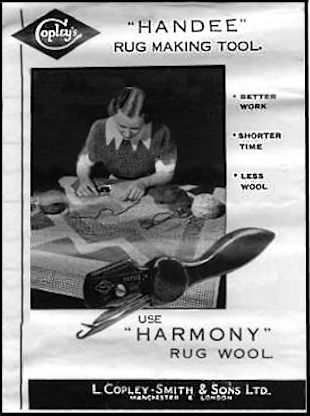
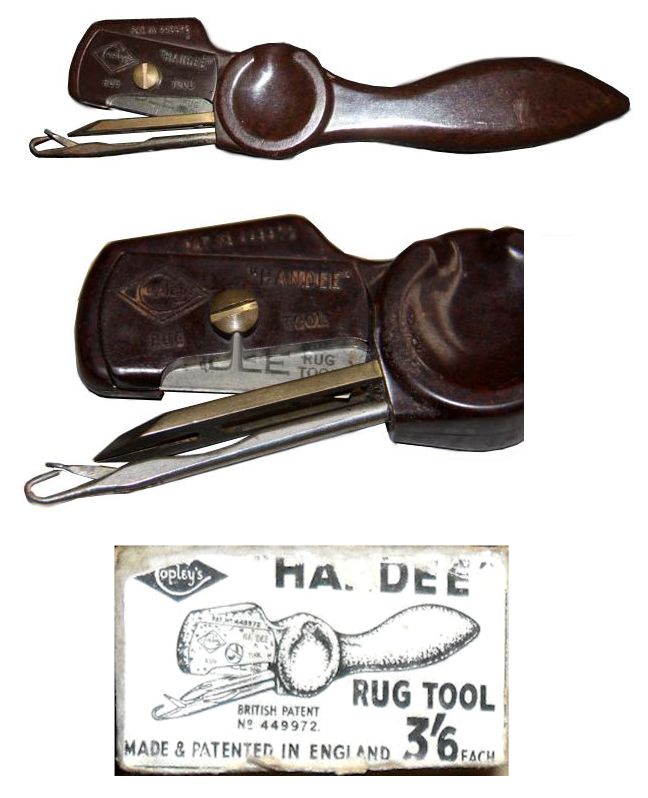
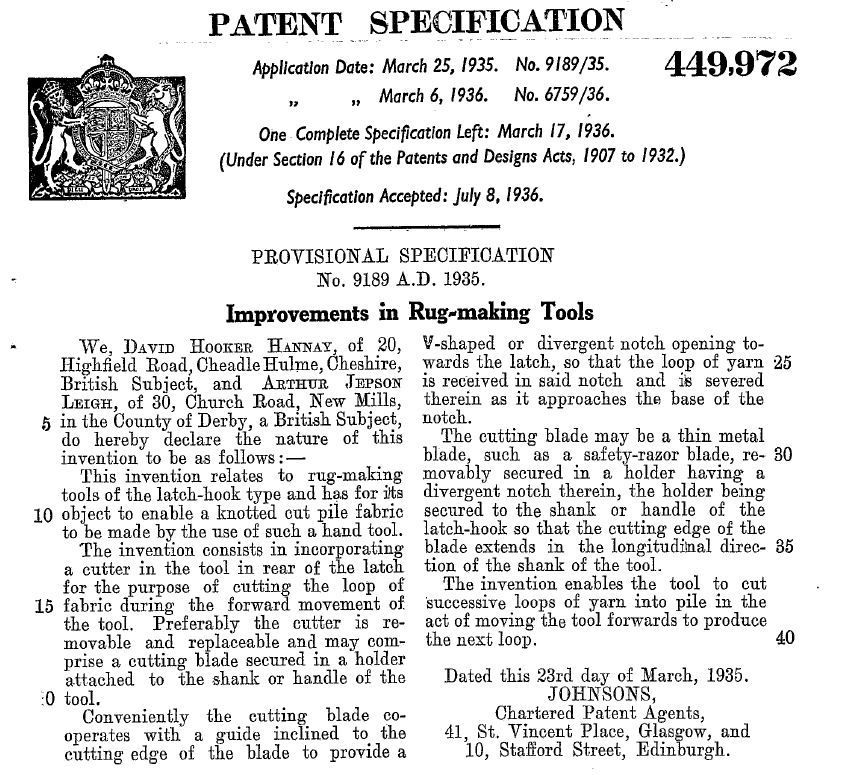
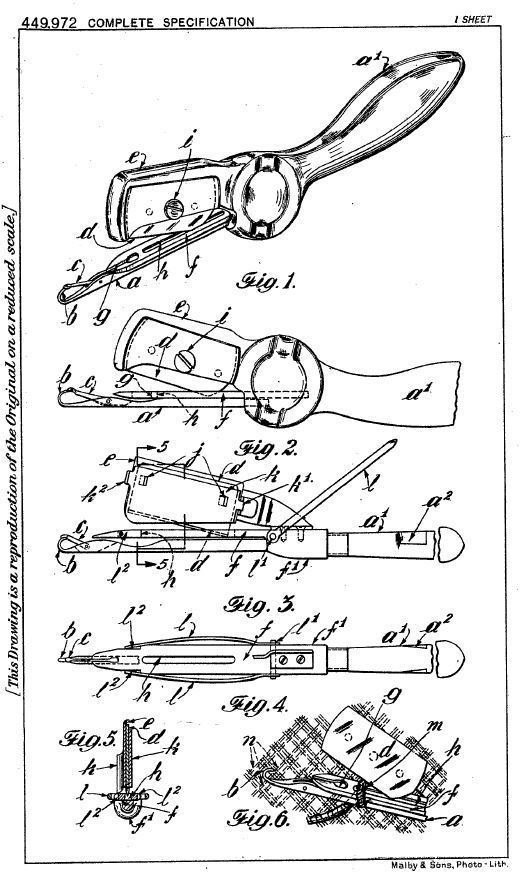
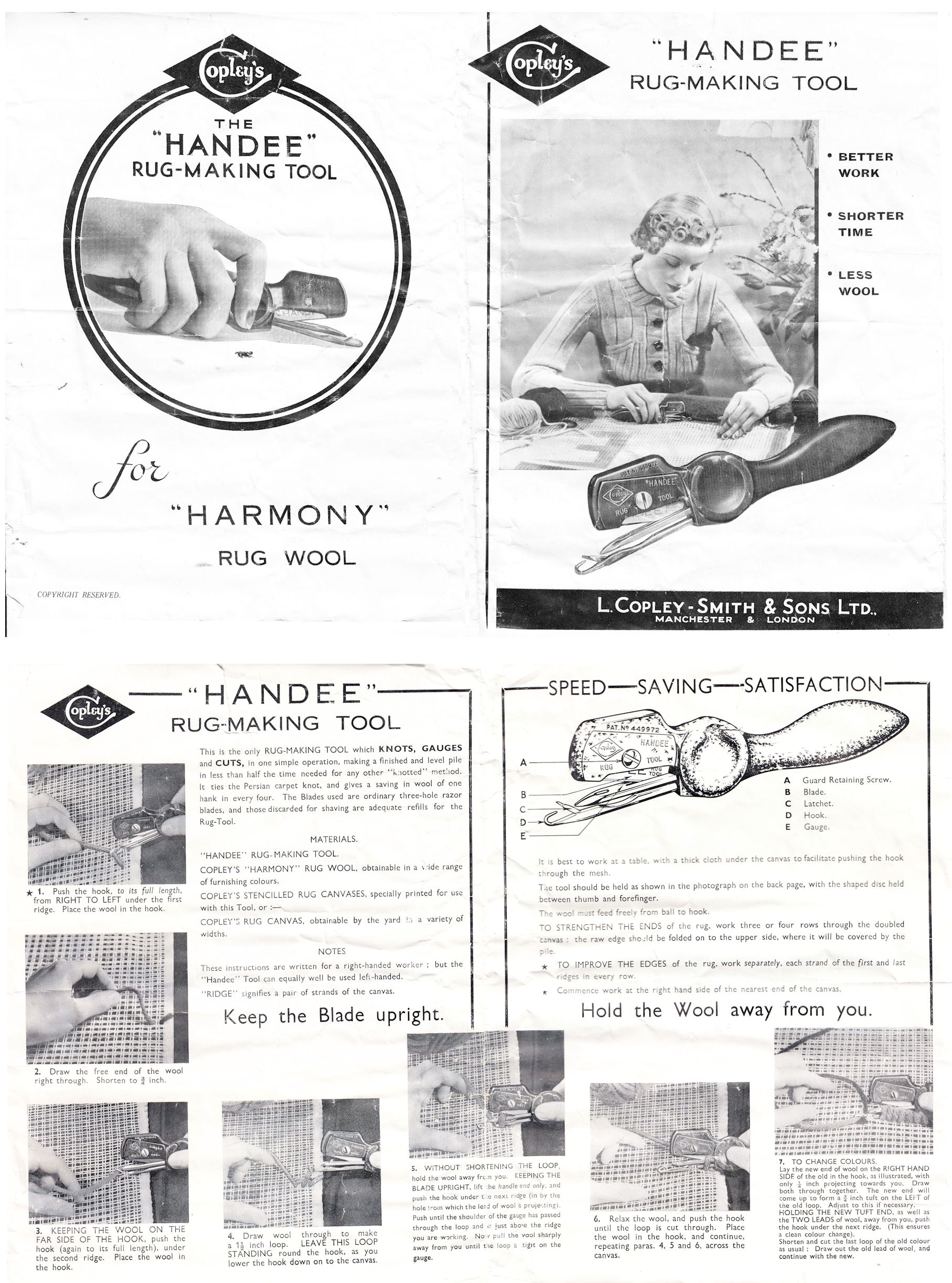
This combination of latch-hook, wool-gauge and cutter looks like the Swiss Army Penknife of latch-hooking tools. It was patented in 1936 and sold under the Copleys brand in the 1950s by L Copley-Smith & Sons Ltd for use with Harmony rug wool. It has GB patent No 449972 summarised "The patent was granted to Arthur Jepson Leigh (30, Church Road, New Mills, Derbyshire) and David Hooker Hannay (20, Highfield Road, Cheadle Hulme, Cheshire) in 1936. The patent described it as A rug-making tool of the latch and hook or other type, which has its shank passed through the backing beneath two threads, Fig. 6, thereof, and is threaded with yarn and afterwards withdrawn to form a loop, is furnished with a cutter which cuts the loop when the tool is moved forward. The loop passes over a guide parallel to the shank of the tool and the threads pass between the shank and the guide, which is slotted to receive the latch and cutter. The latter is inclined with respect to the guide and co-operate therewith to cut the loop. Hinged loop enlarging members may be moved into loop enlarging position, Fig. 4, or inoperative position Fig. 3.; The cutter may comprise a safety razor blade removably fitted on a projection of a holder screwed to an enlargement of the guide and clamped between this and a hinged plate furnished with a clip fastener. A modified form is described having the cutter mounted in a holder moulded with the handle. To this, an interchangeable guide is screwed &c. The cutter may be longitudinally adjustable. The tool may be of the pliers type, with a spring pressed pivoted jaw, the cutter and guide being carried from the tool shank or the jaw, or one from each. The backing may comprise single weft and warp threads. According to the later Provisional Specification, the handle and cutter holder are of a synthetic resin material."
There is little information on Copley & Sons Ltd. The original incorporation date and dissolution date for L Copley-Smith & Sons Ltd (Manchester) aren t listed online, although a company of the same name is listed as incorporated in 1960 and dissolved in 2004. Copley s were obviously suppliers of yarns and hand-knitting accessories. In 1948, The American Thread Company challenged L Copley-Smith & Sons Ltd over the use of a diamond-shaped logo; the conflict was due to both parties using this style of logo in the trade class for worsted and rayon hand-knitting yarns.
|
|
|
|
|
|
|
|
|
George Copley-Smith and Arthur Jepson Leigh also patented an improved knife for use with wooden wool gauges. It is described on the "cutters" page of this website.
The Swiba Knotting Set & Smyrna Presto
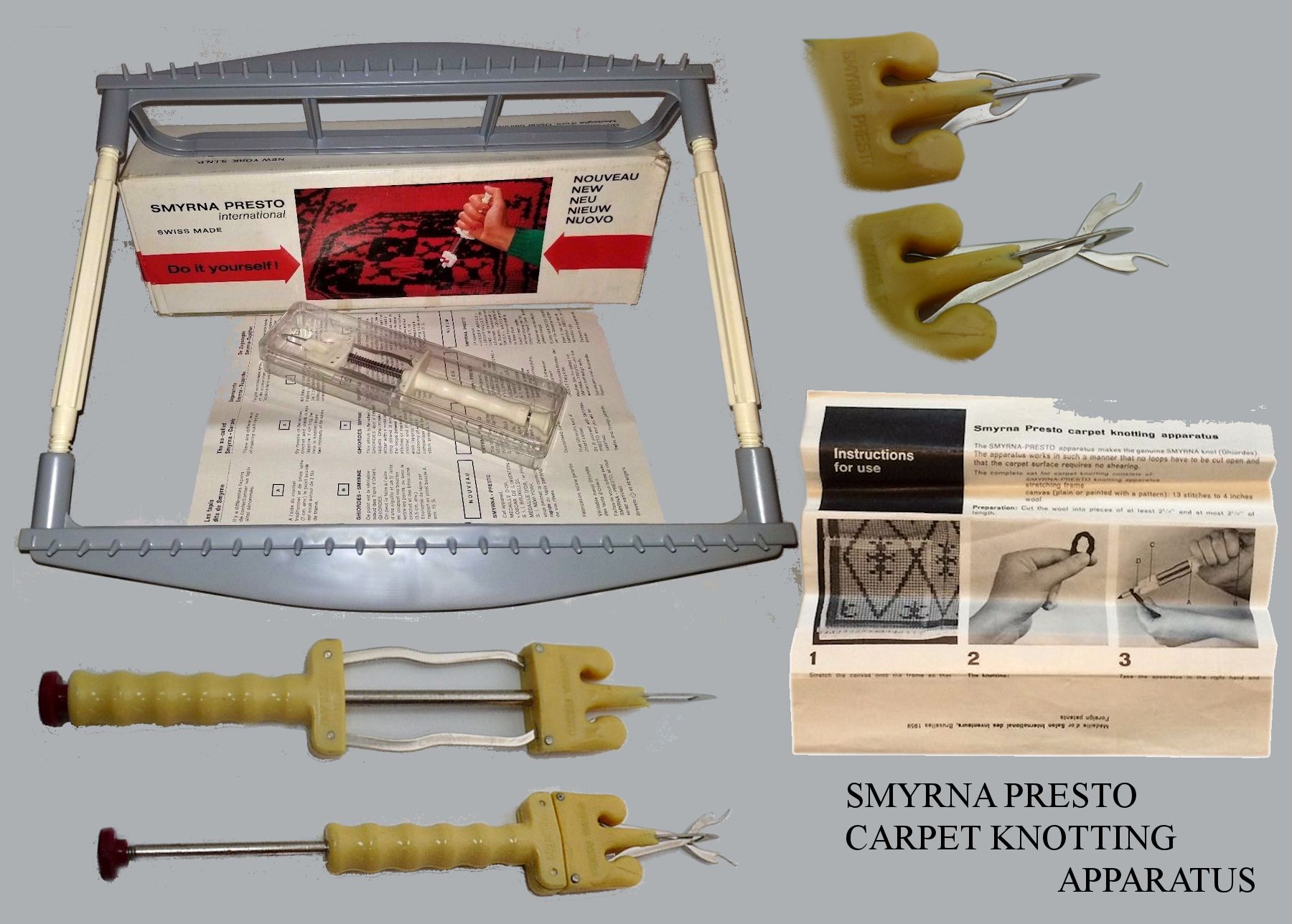
German latch-hooking differed from British and American methods by using the Ghiordes knot rather than the Smyrna knot. The Swiba / Smyrna knotting tool (1970s?) was more like a rug-needle, rather than a latch hook. Like older rug-hooking methods, it also required a frame either a free-standing floor-frame or a square lap frame to enable the tool to work. The lap frame could be extended to suit different canvas widths and the worked canvas could be folded underneath it for neat storage. An English language version was produced.
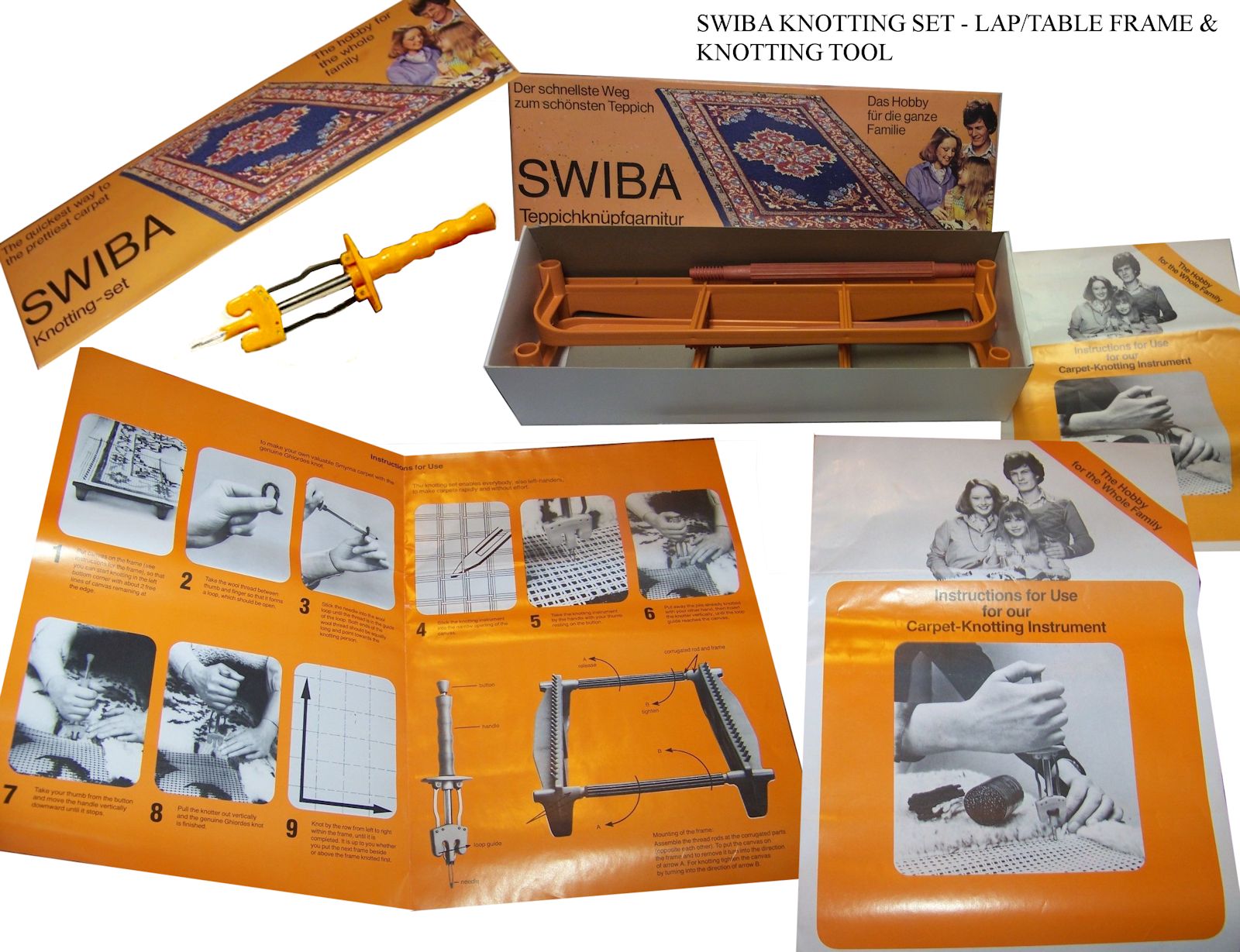
The basic instructions were:
(1) Mount canvas on frame and begin knitting from lower left corner. (2) Take wool thread between thumb and forefinger so it forms an open loop. (3) Stick the needle through the wool loop until the thread is in the guide (two notches either side of shaft) and hold the free ends towards you. (4) Insert the needle into the narrow opening of the canvas (this is only possible on older types of canvas!) (5) Hold down the button at the top of the tool and push tool vertically through canvas until the wool guide touches the canvas. (6) Take thumb off button and push tool downward until it stops. (7) Pull the knotter out vertically.
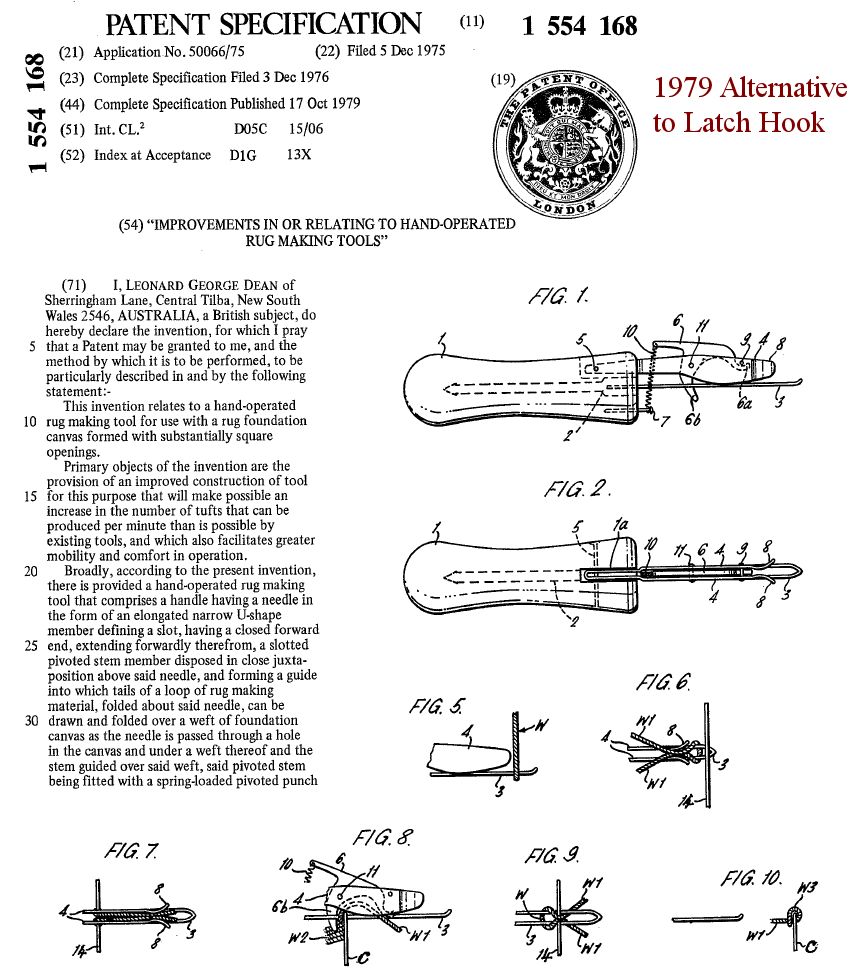
Dean's Rug-Making Tool
Doyel's Rug Hooking Tool For Hobby Users
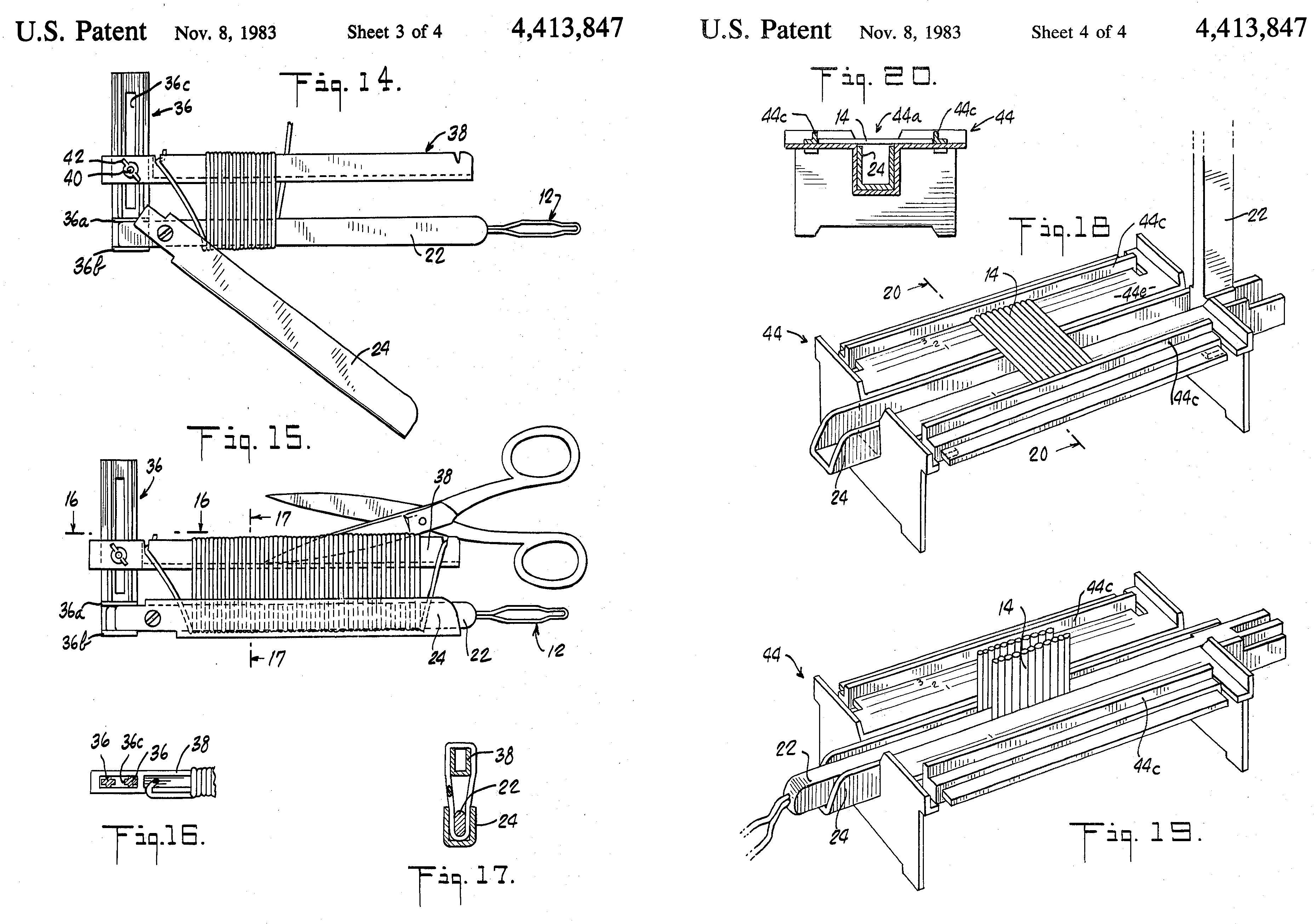
Patented in 1983 by John S Doyel (New York, NY). Doyel's invention was a rug hooking new tool to be used in place of the conventional latch hook. Instead of a metal shank and hook, there was a shaped (see images), closed integral loop of a firm material which could be inserted into canvas. The handle comprised "a shank received into a shell such that a magazine is formed therebetween for lengths of yarn which can slide therein forwardly onto the loop. The shank and shell can be separable to allow the shank to mate with a loader for loading the magazine with lengths of yarn. One type of loader uses windings of a continuous length of yarn which are cut into individual lengths in the course of loading the magazine. Another type uses pre-cut lengths of yarn. The same magazine and loaders can be used with a tool having a conventional latch hook tip."
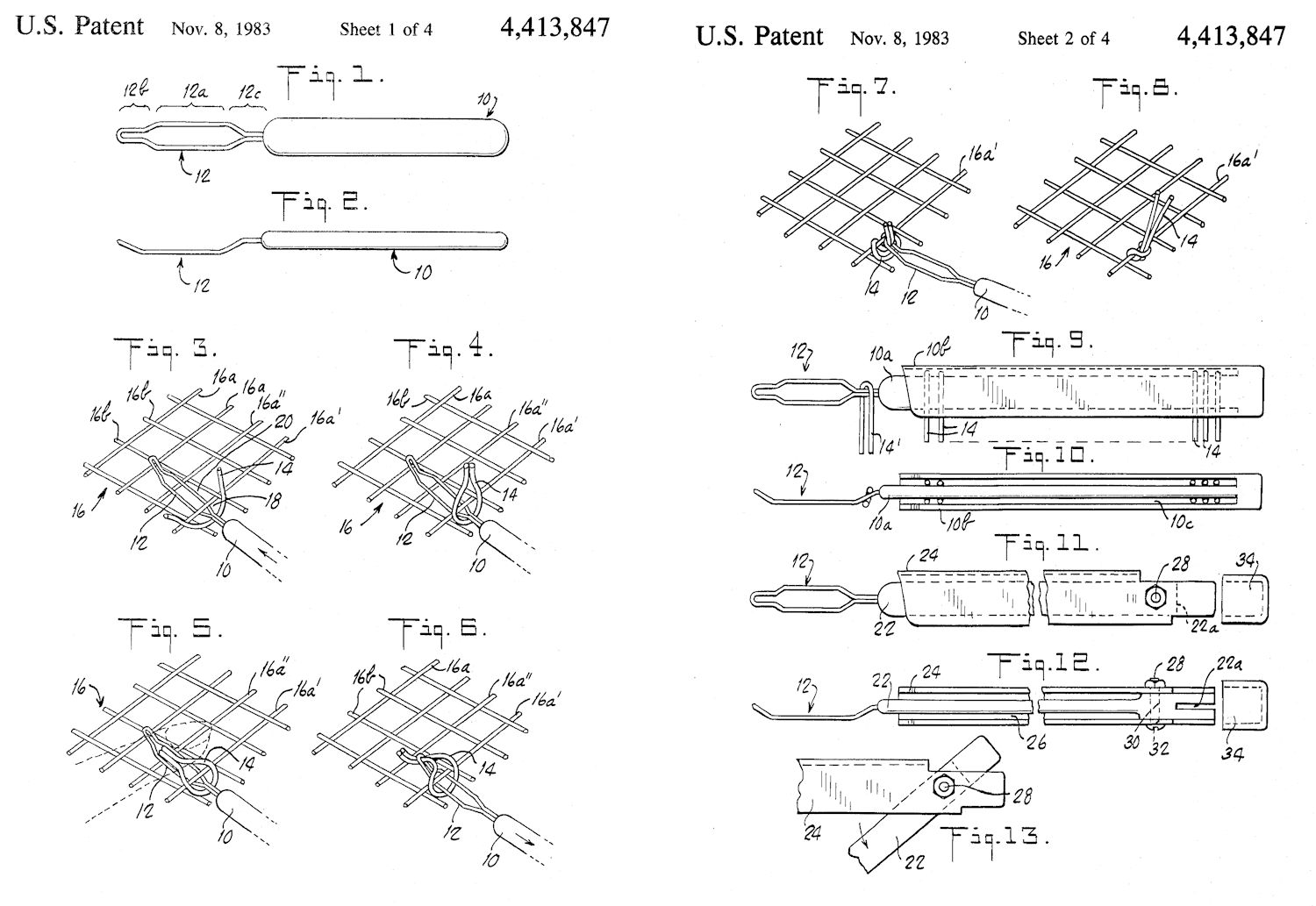
To use it, the loop was inserted forwardly into the canvas in the usual manner. A pre-cut a length of yarn was loaded (see image) and could be knotted by pushing the free ends forward over the canvas thread and down into the wider part of the loop, then withdrawing the tool backwards from the canvas to create a knot. The handle of the tool fitted into an adjustable width yarn loader/cutter. The full description is tortuous, but luckily there are drawings as well. Figs 9 & 20 show the tool mated with the yarn magazine, and the yarn winder, cutter and magazine. It looks a rather complicated method of achieving the same effect as a latch hook, a length of wood and a pair of scissors!
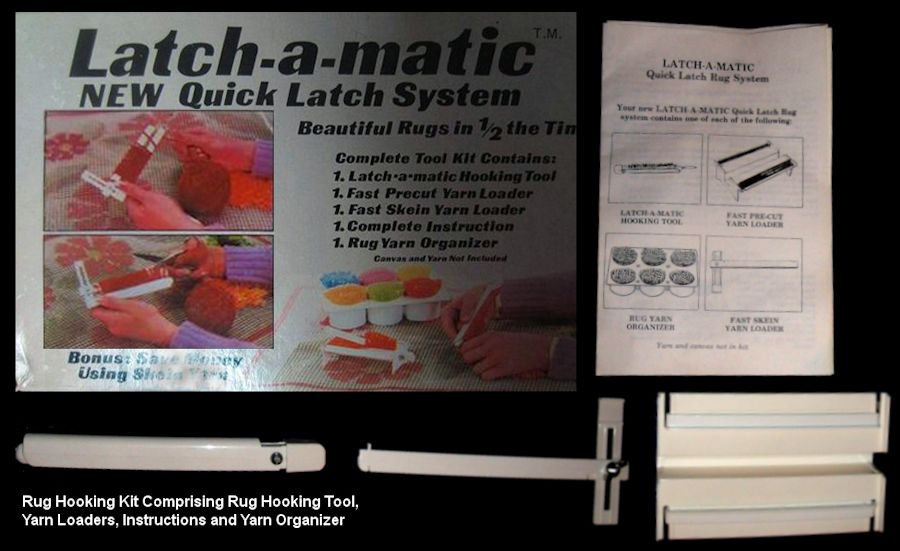
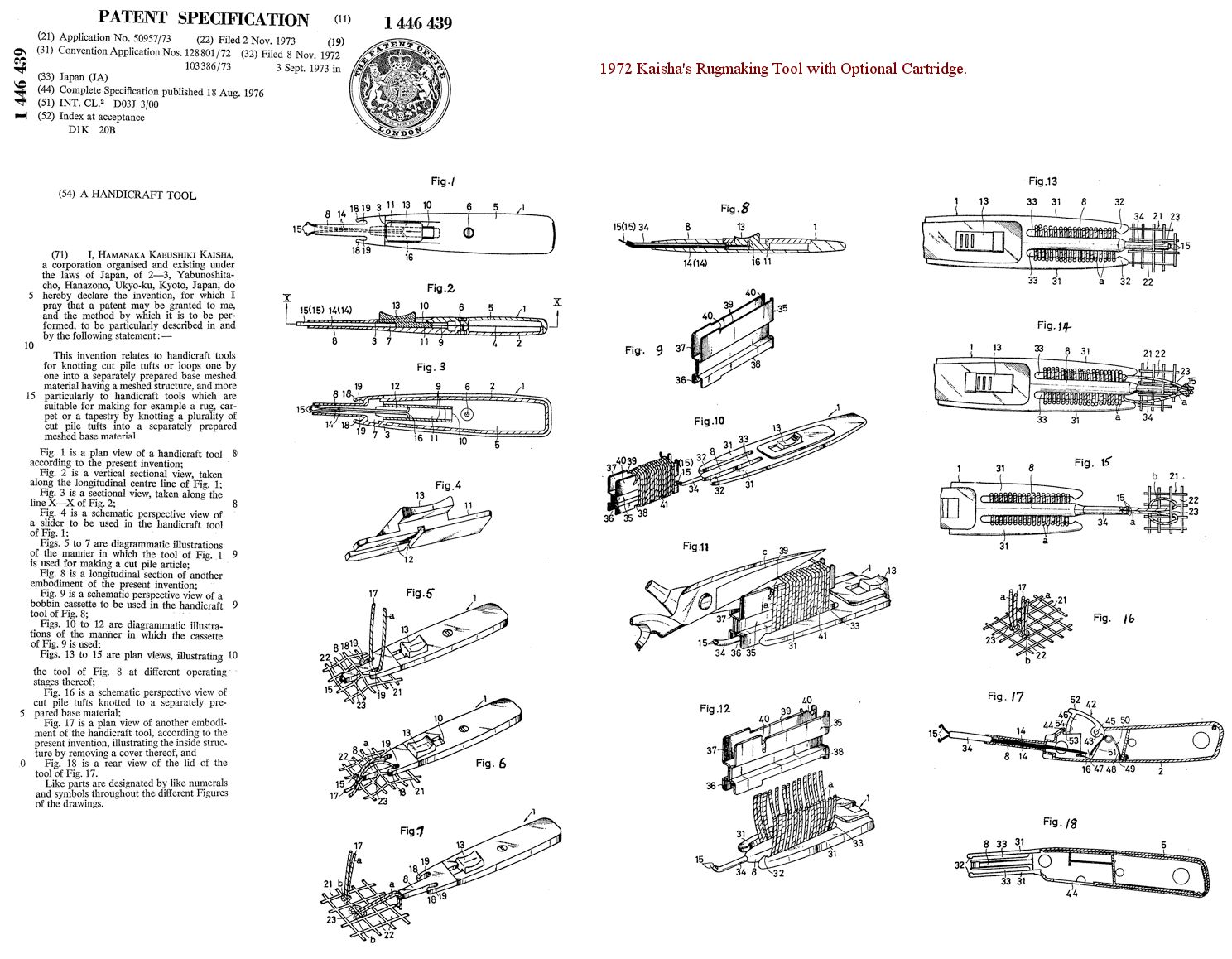
The cartridge idea looks much like the Latch-a-matic that was briefly revived as a rug-making system. An interesting, but over-complicated idea and less robust than the traditional method.
Quick-Tie-Rya Rug Hook
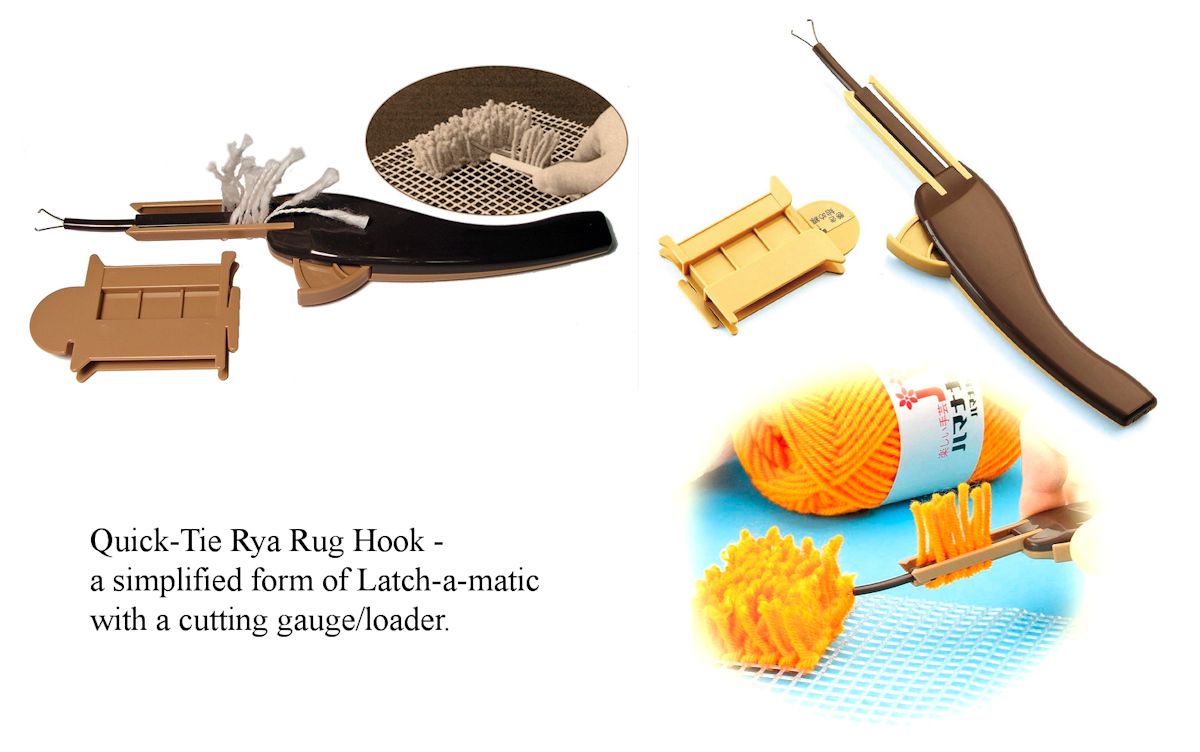
Though described as a Rya hook, the illustrations show a conventional latch-hooked canvas. The Quick-Tie Hook was described as an amazing tool that would, from a length of yarn, continuously deliver perfectly cut, knotted yarn to the mesh canvas, for hooking pile rug. The tool has a cartridge to carry a number of cut lengths of yarn. A spring-loaded plastic tool would not last as long as a wood and metal latch hook. There is a Japanese patent for a very similar device.
Rapid Rug Gun
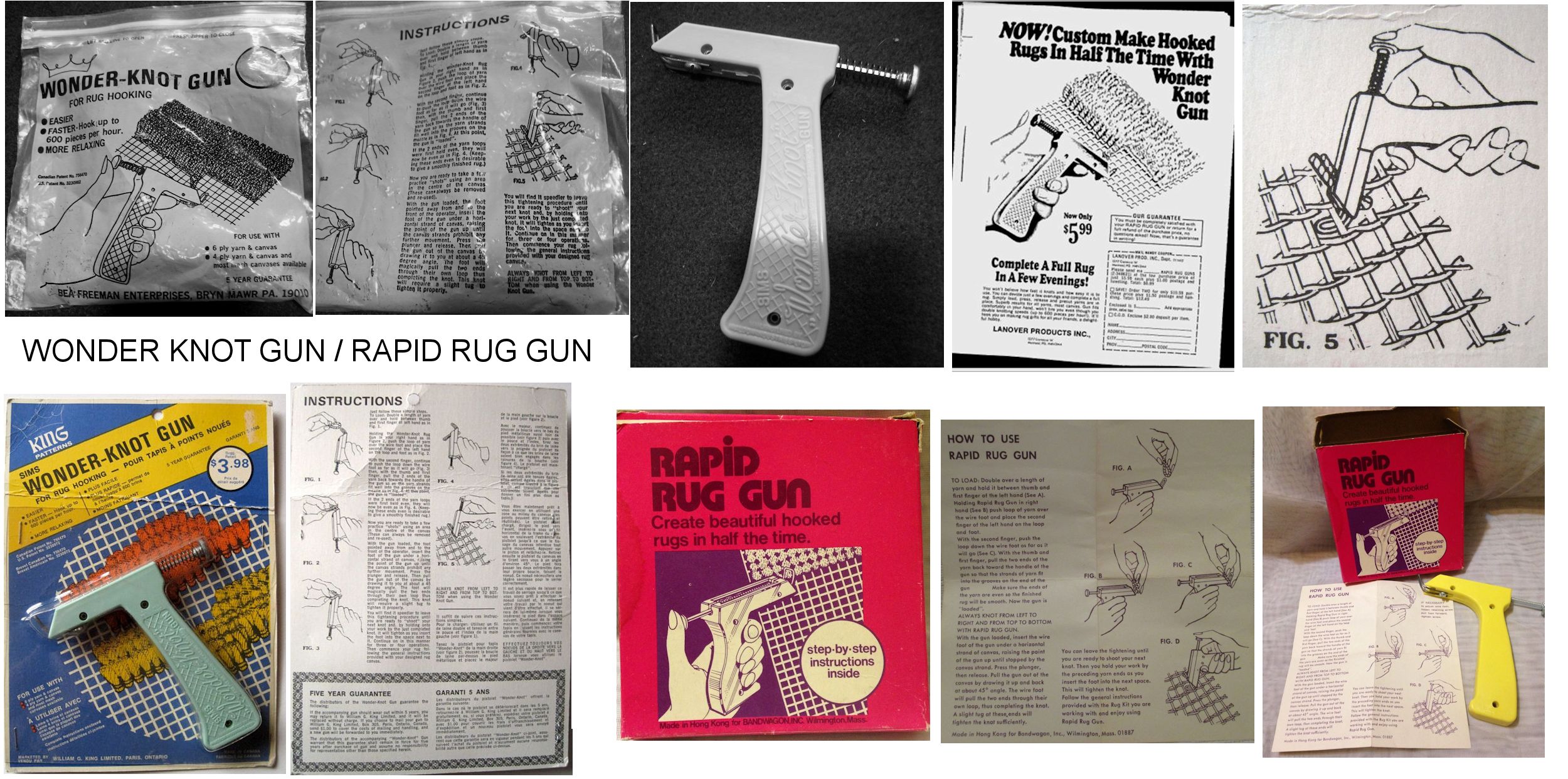
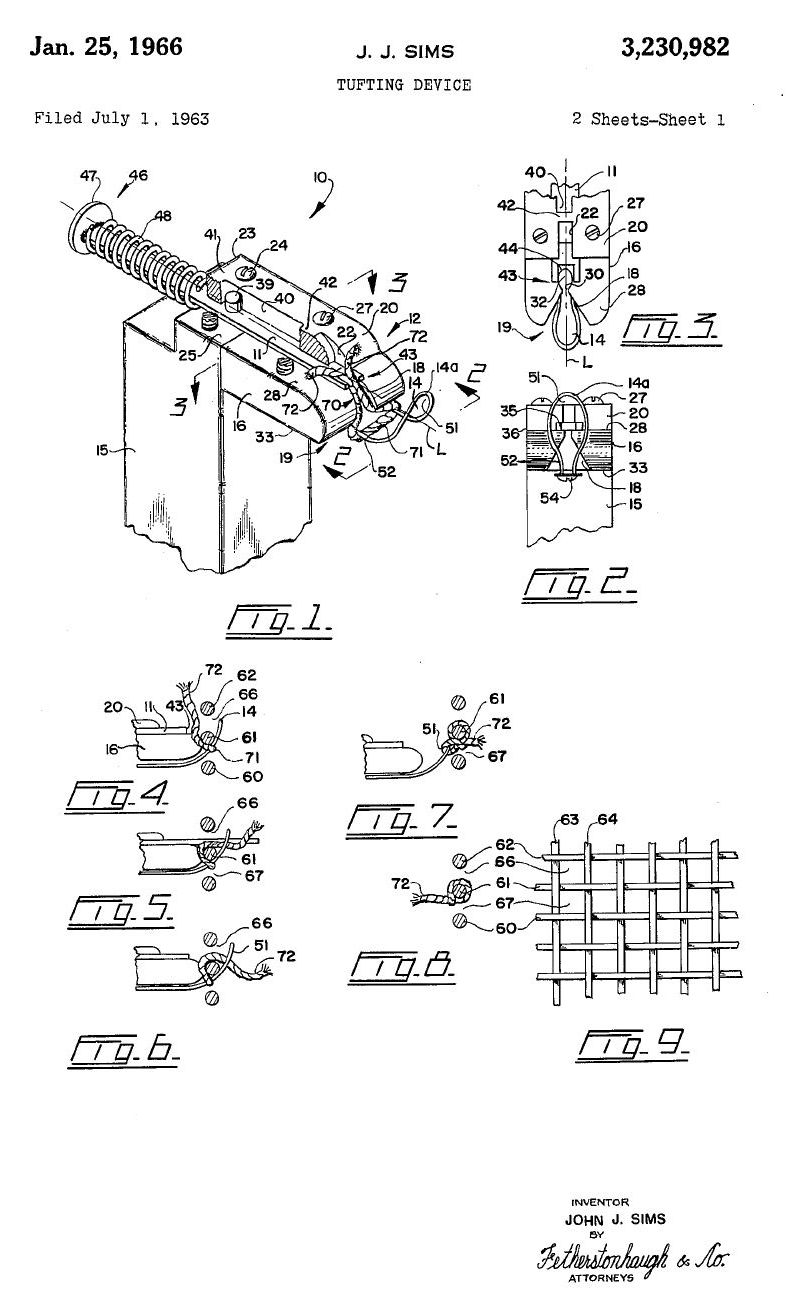
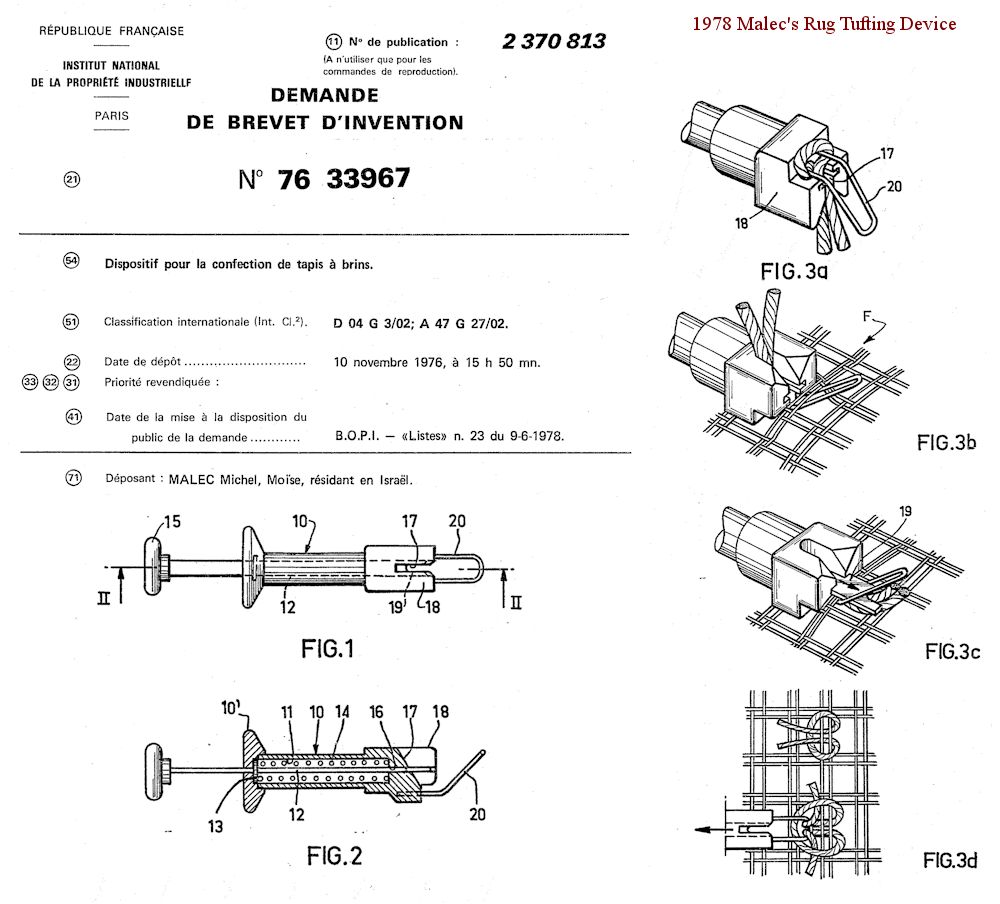
A patent for a tufting device was filed by John J. Sims of British Columbia, Canada in 1963. It used a plunger to fire and retract a loop of yarn. It apparently gave greater uniformity as well as speed, and allowed one-handed operation. In 1978, Michel Malec filed a patent in France for a very similar tufting device. The rapid rug gun (or wonder-knot gun) appears to be use these designs.
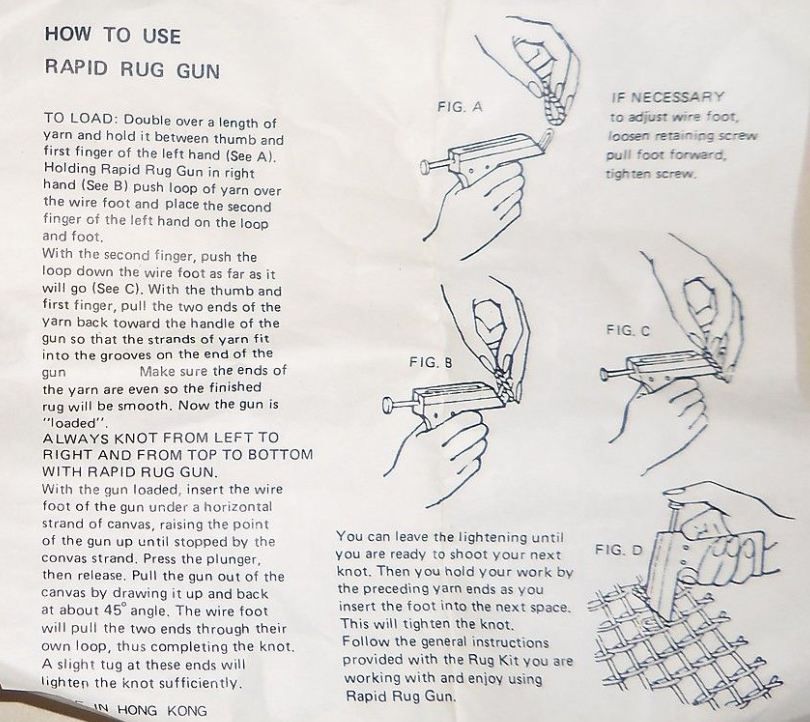
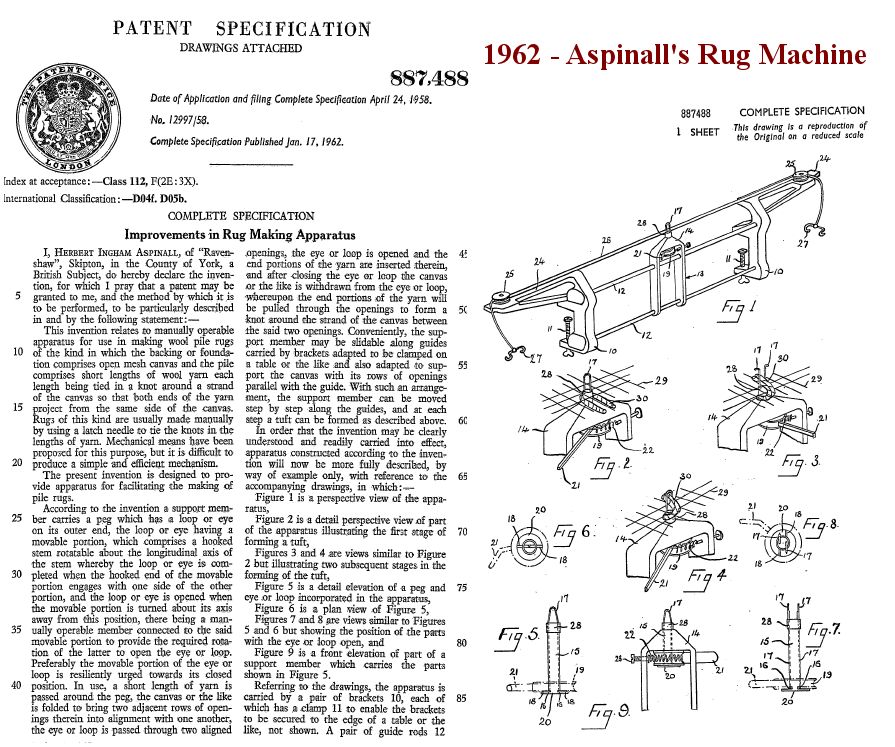
ASPINALL'S RUG MACHINE